
And you are left wondering:
Why Is Writing So Hard for My Child?
Writing struggles are not always about effort.
A private neuropsychological evaluation can help explain why writing is so hard and what support your child actually needs.
Serving Long Island & Queens, NY
 Dr. Courtney Duhning, Psy.D., ABSNP, NCSPPediatric Neuropsychologist · Manhasset, NY
Writing Is Not Just Writing
Writing looks simple, but it is not.
To write, your child has to manage:
- ideas
- spelling
- handwriting
- grammar
- organization
- attention
- working memory
- planning
- speed
- frustration
That is a lot for one assignment.
So when your child says: “I hate writing.”
They may really mean: “This is too much for my brain to do at once.”

The Signs Parents Notice First
You may see:
- writing takes way too long
- handwriting is messy or inconsistent
- your child says their hand hurts
- they write much less than they can say
- they freeze when asked to start
- they erase over and over
- spelling falls apart
- homework ends in tears
- they say, “I’m bad at this”
- they avoid writing whenever possible
These are not just bad habits.
They are clues that something more is going on.
Writing Struggles Can Look Different by Age
You may notice:
- avoids coloring, drawing, or tracing
- has trouble holding a crayon or pencil
- gets frustrated with letters
- struggles to copy shapes
- has difficulty writing their name
- says their hand is tired
At this age, the question is often:
Is this developmental, fine motor, attention-related, or an early sign that writing may be harder than expected?
You may notice:
- handwriting is messy or slow
- writing homework takes forever
- spelling falls apart
- your child writes much less than they can say
- writing leads to tears, avoidance, or shutdowns
- they say, “My hand hurts” or “I hate writing”
This is often when parents start wondering:
Is this dysgraphia, ADHD, anxiety, reading/spelling weakness, or something else?
You may notice:
- written assignments are short or disorganized
- essays take hours
- your child cannot get started
- they avoid longer writing tasks
- they lose points for missing details
- they know the material but cannot show it in writing
At this age, writing problems often become harder to hide because the workload increases.
The question becomes:
Why can my child understand the material but not produce written work efficiently?
You may notice:
- essays feel overwhelming
- writing takes far longer than peers
- your teen procrastinates until the last minute
- written work does not reflect what they know
- timed writing is especially hard
- they may need support for school or testing accommodations
At this age, the concern is often:
What supports, accommodations, or interventions are needed before college or the next academic step?

The Question Is Not Just “Is This Dysgraphia?”
The better question is:
What part of writing is breaking down?
For some children, it is handwriting.
For others, it is spelling.
For others, it is getting started.
Or organizing ideas.
Or holding thoughts in mind.
Or working fast enough.
Or managing anxiety when the page is blank.
Dysgraphia may be part of the picture.
But writing problems can also be related to:
- ADHD
- anxiety
- executive functioning weaknesses
- slow processing speed
- language difficulties
- reading or spelling weaknesses
- fine motor concerns
- perfectionism
- working memory difficulties
That is why guessing gets frustrating.
The right support depends on the right explanation.
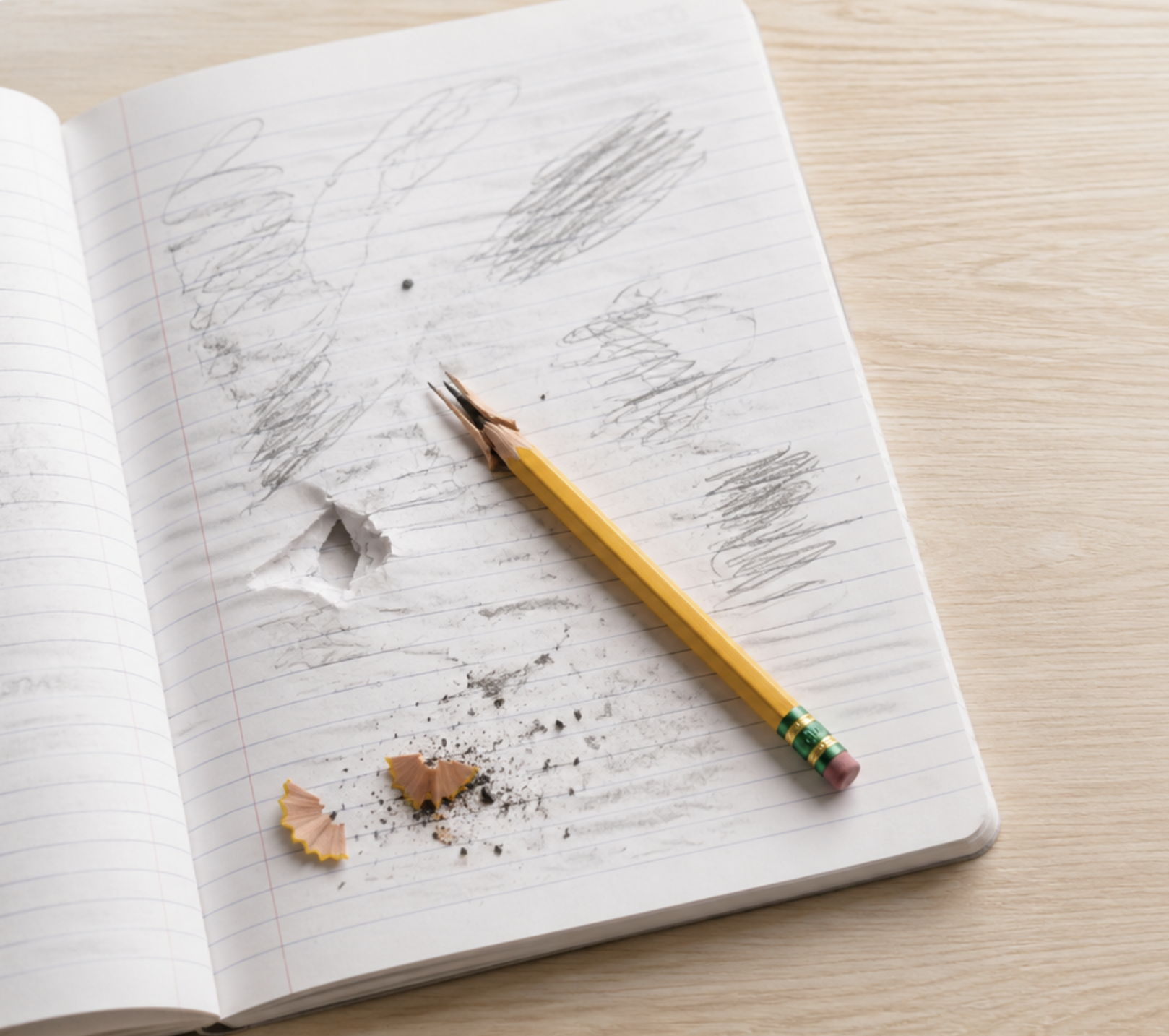
“They Can Tell Me the Answer, But They Can’t Write It”
This is one of the biggest red flags parents describe.
Your child explains the answer out loud.
Then they sit down to write it…
And suddenly it becomes:
one sentence • messy words • blank page • tears • “I don’t know”
That gap matters.
It can mean your child understands more than their written work shows.
A neuropsychological evaluation helps figure out where the breakdown is happening.

DO NOT IGNORE
If Writing Hurts Their Hand
Hand pain can come from:
- pencil grip
- pressing too hard
- poor letter formation
- fine motor strain
- slow handwriting
- tension
- writing taking too much effort
A neuropsychological evaluation can help determine if hand pain comes with slow output, avoidance, spelling issues, poor organization, attention concerns, anxiety, or trouble getting ideas onto paper, & figures out what supports will help.
Why “Just Practice More” Can Backfire
More writing practice is not always the answer.
If the wrong problem is being treated, your child may just feel more defeated.
A child who struggles with writing may need:
- writing intervention
- spelling support
- occupational therapy
- keyboarding
- speech-to-text
- graphic organizers
- reduced copying
- extended time
- executive functioning support
- anxiety support
- school accommodations
The right support depends on the reason writing is hard.
Not every writing problem needs the same plan.

What a Private Neuropsychological Evaluation Can Help Answer
A private neuropsychological evaluation can help answer:
- Why does writing take so long?
- Why does my child’s hand hurt?
- Why can my child explain ideas but not write them?
- Is this dysgraphia, ADHD, anxiety, slow processing, or something else?
- Is spelling part of the problem?
- Is handwriting part of the problem?
- Is executive functioning part of the problem?
- Does my child need OT, tutoring, assistive technology, therapy, or accommodations?
- What should I ask the school for?
- What can we do at home?
The goal is not just a label.
The goal is the right plan.
What You Receive
A comprehensive evaluation can provide:
a clear explanation of your child’s writing profile
assessment of learning, attention, executive functioning, processing speed, memory, academics, language, and emotional factors
diagnostic clarity when appropriate
school recommendations
accommodation guidance
recommendations for writing supports
guidance about whether OT, tutoring, therapy, or assistive technology may help
a detailed written report
a feedback session to review next steps
You are not just getting test scores • You are getting direction.
Stop Fighting About Writing
If writing is taking over your evenings, your child may not need more pressure.
They may need a better explanation.
A private neuropsychological evaluation can help you understand what is getting in the way and what to do next.
FAQs
Frequently Asked Questions
Why does writing take my child so long?
Writing can be slow when a child struggles with handwriting, spelling, planning, attention, processing speed, working memory, anxiety, or organizing ideas. A neuropsychological evaluation can help identify which part of the writing process is breaking down.
Why does my child’s hand hurt when writing?
Hand pain may be related to pencil grip, fine motor weakness, pressing too hard, inefficient handwriting, or tension. If hand pain happens along with slow writing, avoidance, messy work, spelling problems, or trouble getting ideas on paper, a deeper evaluation may be helpful.
Is this dysgraphia?
It could be, but not every writing struggle is dysgraphia. Writing problems can also be related to ADHD, anxiety, executive functioning, language, reading/spelling weaknesses, processing speed, or fine motor concerns.
What kind of evaluation does my child need for writing problems?
A neuropsychological evaluation can look at the full learning profile, including writing, attention, executive functioning, processing speed, memory, language, academics, and emotional factors. An occupational therapy evaluation may also be helpful if fine motor or handwriting mechanics are a major concern.
Can school testing diagnose dysgraphia?
No. School testing may identify writing weaknesses, but it may not provide the same diagnostic clarity as a private neuropsychological evaluation. A private evaluation can provide a diagnosis and help explain the reason behind the writing struggle as well as guide targeted recommendations.
What accommodations help kids who struggle with writing?
Helpful accommodations may include extended time, reduced copying, keyboarding, speech-to-text, graphic organizers, spelling supports, shortened written output when appropriate, and alternative ways to show knowledge. The right accommodations depend on why writing is hard.
Continue reading