
When your child has strong ideas but writing them down on paper is a struggle
You’ve tried to get answers.
But things still don’t fully make sense.
Comprehensive dysgraphia evaluations on Long Island & Queens for children and teens designed to help you understand why writing feels so difficult and what to do next.

Dr. Courtney Duhning, Psy.D., ABSNP, NCSP
Board-Certified Pediatric Neuropsychologist
Serving families across Long Island & Queens
You may have been noticing it for a while
Your child is SMART
And yet, when it comes to writing…
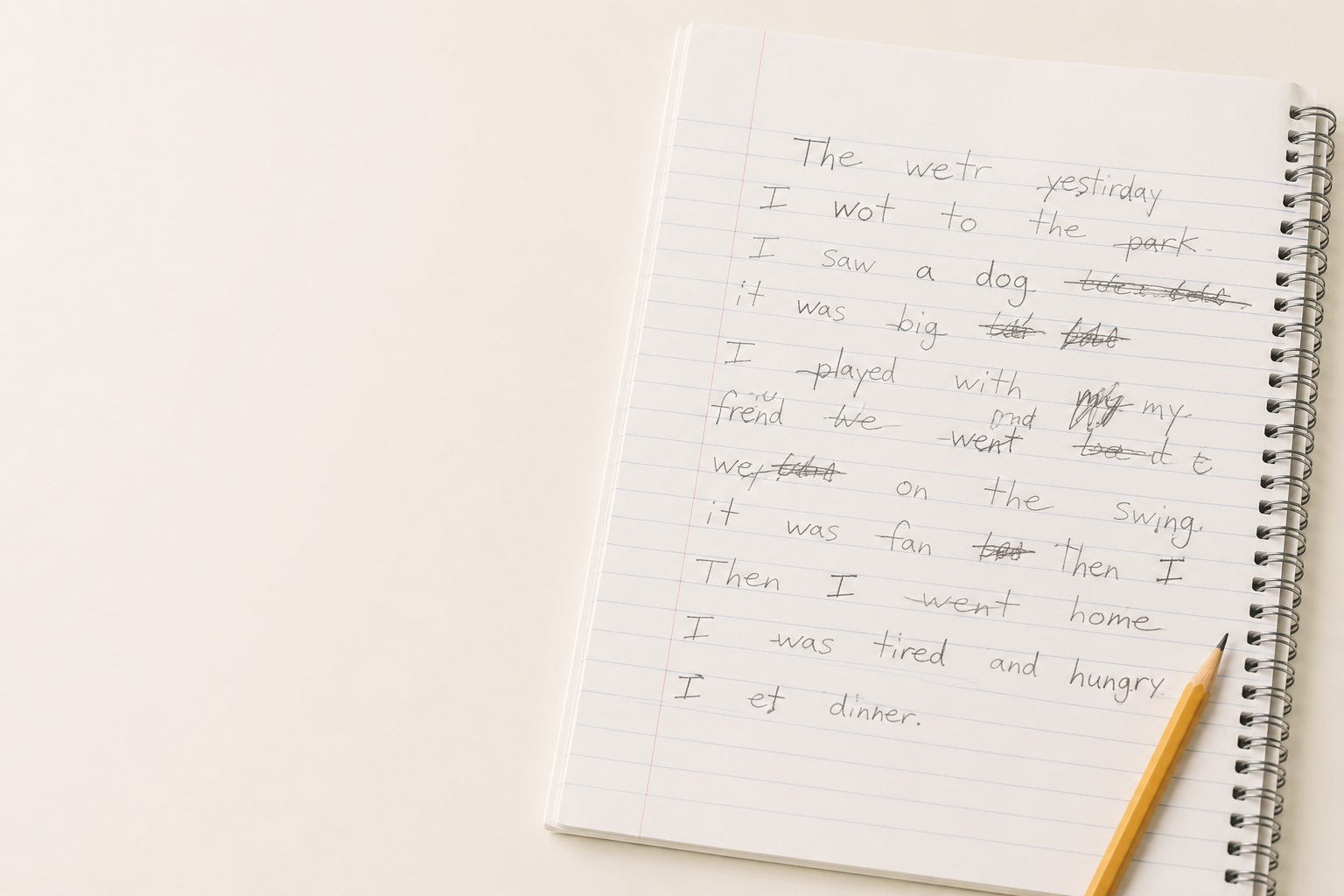
their work is messy, rushed, or difficult to read
writing takes much longer than expected
they avoid written assignments or put them off
their written work doesn’t reflect what they know
they struggle to organize their thoughts on paper
And at some point, the question becomes:
“ Why is writing so much harder than everything else? ”
For many families, this becomes increasingly concerning
Not just because of grades but because of what it starts to affect.
You may be noticing that your child is:
working harder than peers, but not seeing the same results
becoming frustrated or discouraged
starting to lose confidence in their abilities
avoiding schoolwork or certain subjects
And you may be wondering:
Why doesn’t their work reflect what they know?
Why does writing take so much effort?
Are we missing something important?

What dysgraphia actually is…
Dysgraphia is a learning difference that affects written expression.
It can involve difficulty with:
handwriting (legibility, spacing, effort)
organizing thoughts into written form
sentence structure and clarity
writing fluency and efficiency
For many children, writing becomes slow, effortful, and frustrating even when they fully understand the material.
A comprehensive neuropsychological evaluation for dysgraphia on Long Island looks beyond surface-level writing performance.
It examines the underlying skills that support writing, including:
fine motor and visual-motor integration
language and expressive skills
executive functioning (planning, organization)
memory and processing speed
This allows us to understand:
whether dysgraphia is present
what specific areas are contributing to the difficulty
how your child’s learning profile fits together
if other conditions are present like dyslexia, dyscalculia, or ADHD
Why a comprehensive dysgraphia evaluation matters


And most importantly:
what will actually help
Before the evaluation, many families describe:
confusion about what is actually going on
trying different supports without clear results
a child who is capable, but increasingly frustrated
uncertainty about how to help
After the evaluation, families often have:
a clear understanding of why writing has been difficult
specific, individualized recommendations
a plan that feels targeted and effective
a child who feels more understood and supported

Why families choose a private neuropsychological evaluation
School-based testing can be helpful, but is often designed to determine eligibility — not to fully understand your child.
A private neuropsychological evaluation allows for:
a more comprehensive and individualized assessment
deeper analysis of how your child learns and processes information
the ability to identify more subtle or complex patterns (important for bright students who mask or compensate for their struggles)
clear, actionable recommendations — not just scores
Many families report being happy to know exactly where the struggle lies and the correct intervention. No more wasting time with trial and error
Dr. Courtney Duhning
Dr. Duhning is a board-certified pediatric neuropsychologist with specialized training in both clinical evaluation and the school system.
Her background as a practicing school psychologist — including experience with IEP and 504 processes — allows her to provide not just diagnostic clarity, but meaningful guidance on how to apply results in real-world settings.
Families often choose to work with Dr. Duhning when they are looking for:
a more precise and individualized understanding
clear explanations — not confusing reports
recommendations they can actually use at home and in school


If your child has strong ideas but struggles to express them in writing, here’s the issue…..
Writing demands increase significantly over time.
Without the right support, frustration can build and confidence can decline.
Clarity earlier allows for more targeted support and prevents that pattern from continuing.
Many families reach this point after trying to make things work for far longer than expected.
At a certain point, it becomes less about trying harder and more about understanding what is actually going on.
Comprehensive neuropsychological evaluations on Long Island: serving Manhasset, Roslyn, Sea Cliff, Garden City, RVC, Westbury, Oyster Bay, Locust Valley, Smithtown, Commack, Dix Hills, and surrounding areas