

Choosing the Right Private School Starts With Understanding Your Child
“Is This the Right School for My Child?”
Choosing a school isn't simply about getting accepted. It's about understanding where your child will thrive.
A comprehensive neuropsychological evaluation provides the insight families need to make confident educational decisions based on how their child thinks, learns, solves problems, and responds to increasing academic demands.
Choosing the Right School Is About More Than Prestige

The best school is not necessarily the most competitive or prestigious. It is the one where your child feels appropriately challenged, understood, and supported.
When a school aligns with your child’s strengths, learning style, personality, and academic needs, it can build confidence, encourage curiosity, and foster a genuine love of learning.
Even a very bright child may struggle in an environment that is too demanding, not challenging enough, or simply not the right fit. Over time, that mismatch can lead to boredom, anxiety, frustration, or potential that goes unrecognized.
Parents Often Say….
“ I want my child to be challenged, not overwhelmed. ”
“ I want to understand how my child learns before making such an important decision. ”
“ I know my child is smart and I want to make sure they are at the right school.”
Is This Evaluation Right for Your Family?
This evaluation may be appropriate if you are:


More Than an IQ Test
A comprehensive neuropsychological evaluation goes far beyond measuring intelligence.
Unlike a brief admissions assessment or IQ test, Dr. Duhning evaluates the many factors that influence how a child learns and succeeds in school.
This includes, but is not limited to:
✓ Cognitive strengths ✓Attention and executive functioning
✓Language and reasoning ✓ Memory
✓Reading, writing, and mathematics ✓ Learning efficiency
✓Sensorimotor functioning ✓ Emotional factors that may affect learning
The result isn't simply a score.
It's a clear understanding of how your child learns best.
What You Receive
More Than a Diagnosis. A Clear Plan.
✓ Comprehensive testing tailored to your child
✓ An understanding of strengths and areas of challenge
✓ Parent feedback meeting
✓ Individualized recommendations tailored to your child
✓ Guidance for educational planning and future private school decisions
✓ Practical strategies for school and home
✓ Confidence that you’re making informed choices
Personally Conducted by a Pediatric Neuropsychologist
Meet Dr. Courtney Duhning
Every evaluation is personally conducted by Dr. Courtney Duhning, a pediatric neuropsychologist and nationally certified school psychologist specializing in the evaluation of learning disabilities, attention/executive functioning concerns, social-emotional difficulties, and complex academic profiles in children and adolescents.
Families work directly with Dr. Duhning throughout the process—from the initial consultation through testing, the feedback conference, and individualized recommendations.
Because no two children learn alike, every evaluation is tailored to the individual child rather than following a one-size-fits-all approach.
The goal is to help you understand your child and their needs to thrive.

Dr. Courtney Duhning, Psy.D., ABSNP, NCSP
Pediatric Neuropsychologist, Suffolk & Nassau County & Queens

Why Families Complete an Evaluation Before the School Year Begins
Many families seek answers before making important educational decisions.
Completing the evaluation before the school year begins allows time to:
Review results thoughtfully.
Consider educational options.
Meet with schools if needed.
Begin the year with a clear plan instead of unanswered questions.
Families hoping to use the evaluation to guide fall educational planning are encouraged to begin the process early, as comprehensive evaluations involve testing, interpretation, a parent feedback conference, and preparation of a detailed written report.
Contact Dr. Duhning
Call/Text: 516-847-5577
Questions Parents Often Ask Before Choosing a School
-
Many bright children earn excellent grades while quietly working much harder than anyone realizes. Others are simply not being challenged academically. A comprehensive neuropsychological evaluation isn't only for children who are struggling. It helps families understand how a child thinks, learns, solves problems, and approaches new challenges. This information can be invaluable when making important educational decisions, including choosing the right school.
-
Yes. While the evaluation is not an admissions assessment, it provides detailed information about your child's cognitive strengths, learning style, executive functioning, academic skills, and educational needs. This helps families better understand the type of learning environment in which their child is most likely to thrive, whether that is a public school, private school, or another educational setting.
-
Dr. Duhning’s role is not to recommend one particular school. Instead, she helps families understand the type of educational environment in which their child is most likely to thrive. That insight allows parents to make informed decisions that align with their child's learning profile, personality, strengths, and long-term goals.
-
Families leave with much more than a diagnosis or a collection of test scores. You'll gain a clear understanding of how your child learns, their cognitive strengths, areas that may require support, and practical recommendations for school, home, and future educational planning. Most importantly, families leave with greater confidence in the decisions they make moving forward.
-
This evaluation may be appropriate for children who:
are being considered for private school
may be gifted or twice-exceptional
appear bright but are not reaching their potential
need greater academic challenge
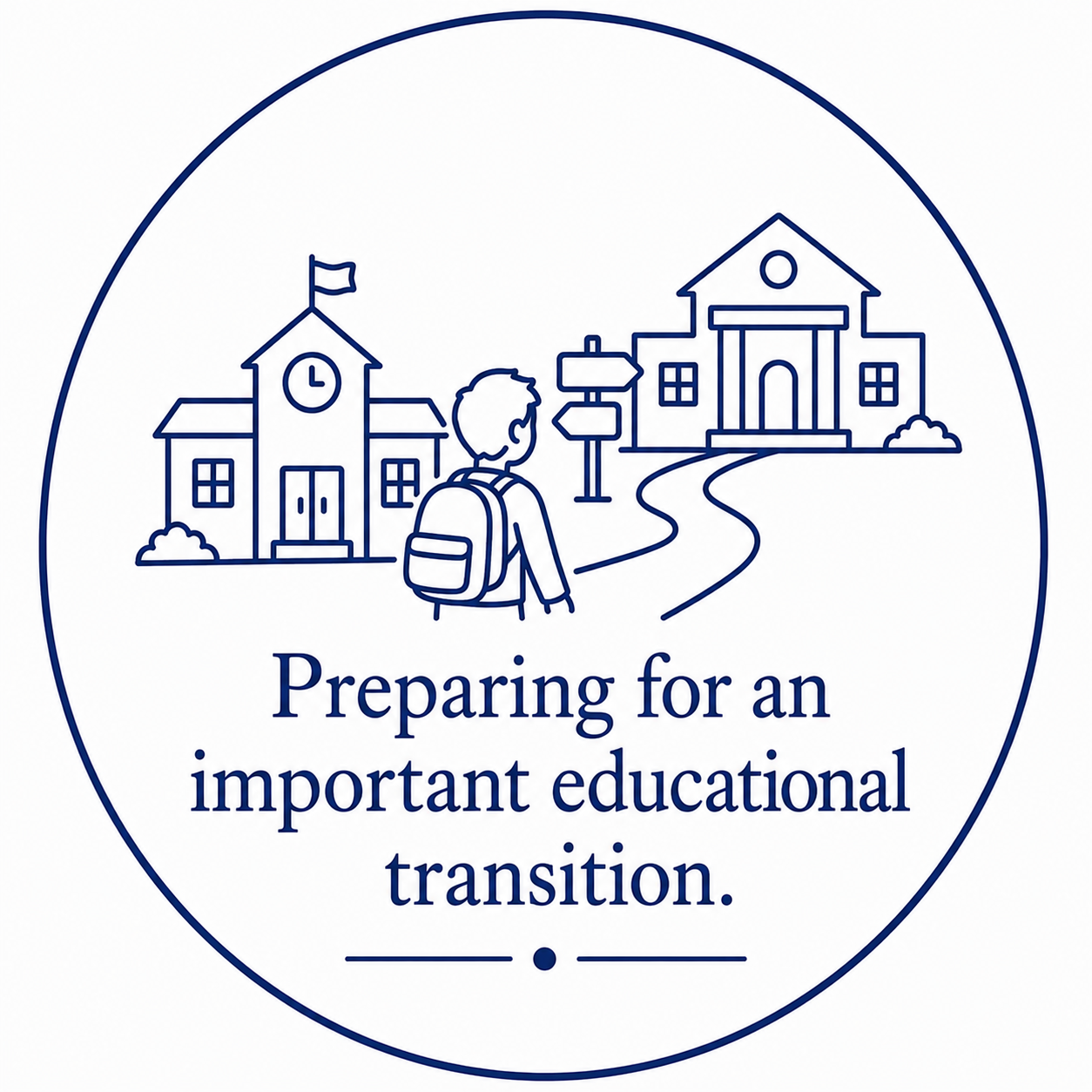
are preparing for an important school transition
seem to work much harder than expected despite good grades
have uneven strengths and weaknesses
would benefit from a clearer understanding of how they learn
-
There is rarely one "perfect" school for every child. The right school is one that matches your child's learning profile, academic needs, personality, executive functioning skills, and emotional well-being. A child who is thriving is appropriately challenged, supported when needed, and engaged in learning. A comprehensive neuropsychological evaluation helps families understand the type of educational environment in which their child is most likely to succeed, providing valuable guidance before making important educational decisions.